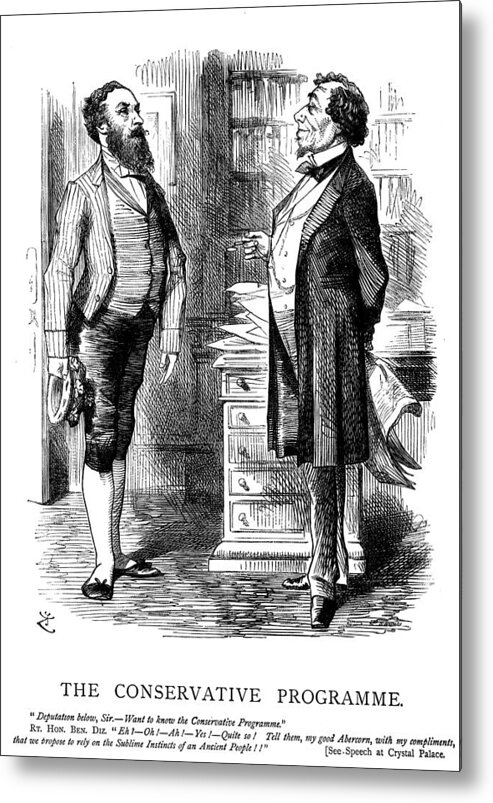
Disraeli's Crystal Palace Speech: Shaping 1875 Social Reform
The year is 1875, and Victorian Britain is grappling with the profound social challenges brought by rapid industrialization. Against a backdrop of burgeoning cities and widespread urban poverty, a landmark piece of legislation, the Artisans' and Labourers' Dwellings Improvement Act, emerged. This Act, often referred to as the Cross Act, was not merely a bureaucratic response to a crisis; it was the tangible fruit of a political philosophy articulated years earlier. Central to this ideological groundwork was Benjamin Disraeli's influential 1872 address at the Crystal Palace – a pivotal moment that cemented his vision for "One Nation Conservatism" and laid the blueprint for significant social reform. This significant *crystal palace spiel* (speech) was more than just rhetoric; it was a promise to the working classes, a commitment to their "elevation," and a clear signal of the Conservative government's intent to intervene where market forces failed.
The Social Crucible of Victorian Britain and Disraeli's Vision
The mid-19th century witnessed an unprecedented demographic shift in Britain. Millions migrated from rural areas to industrial towns, leading to overcrowded cities, unsanitary living conditions, and the proliferation of squalid slums. Diseases like cholera and tuberculosis ravaged these areas, highlighting a stark divide between the affluent and the struggling working class. This social chasm fueled fears of unrest and revolution, prompting some forward-thinking politicians to reconsider the prevailing laissez-faire attitudes towards social welfare.
Enter Benjamin Disraeli, a charismatic and unconventional Conservative leader. Disraeli recognized the inherent dangers of a divided society, famously speaking of "two nations" – the rich and the poor – living side-by-side but with entirely separate experiences. His political philosophy, known as
One Nation Conservatism, sought to bridge this divide by promoting social cohesion through compassionate governance and a sense of shared national identity. This wasn't altruism for its own sake, but a strategic understanding that a healthy, stable society required the well-being of all its citizens. It posited that the state had a duty to protect the vulnerable, thereby safeguarding the entire social fabric. It was within this ideological framework that his subsequent *crystal palace spiel* gained such profound significance.
The Pivotal Crystal Palace Spiel: A Blueprint for Reform
In 1872, Benjamin Disraeli delivered a series of speeches that profoundly shaped the future direction of the Conservative Party and British social policy. His address at Manchester and, most notably, his celebrated *crystal palace spiel*, were not mere campaign rallies; they were carefully crafted declarations of intent. The choice of the Crystal Palace, itself a monument to Victorian innovation and grandeur, was no accident. It served as a powerful symbol of national achievement and public engagement, making it an ideal venue for Disraeli to unveil his vision for the nation's future.
During this transformative *crystal palace spiel*, Disraeli articulated his core belief in the "elevation of the people" – a commitment to improving the lives and conditions of the working class. He emphasized the importance of public health, sanitation, and decent housing, framing these issues not as charitable acts but as essential components of national strength and stability. While the speech itself did not outline specific legislative details, it established the moral and political imperative for government action. It signaled a clear departure from the purely reactive politics of the past, suggesting a proactive role for the state in ensuring the welfare of its citizens. This ideological commitment, first broadcast from the iconic glass structure, provided the political will and public mandate necessary for the reforms that would follow, fundamentally shifting the narrative around conservative governance.
The Artisans' and Labourers' Dwellings Improvement Act of 1875: A Tangible Legacy
The promises embedded within Disraeli's *crystal palace spiel* came to fruition with the passing of the Artisans' and Labourers' Dwellings Improvement Act in 1875. Championed by Richard Cross, Disraeli's Home Secretary, this Act was a groundbreaking piece of legislation designed to tackle the dire housing conditions prevalent in urban areas.
Key provisions of the Cross Act included:
*
Empowering Local Authorities: The Act granted local councils unprecedented powers to purchase areas designated as "slum dwellings." This was a significant step, moving beyond mere regulatory oversight to direct intervention in the housing market.
*
Slum Clearance: Once acquired, these areas could be cleared, removing the dilapidated and unsanitary structures that characterized the worst of Victorian poverty.
*
Rebuilding and Improvement: The cleared land was then intended for rebuilding with improved, healthier housing. While the Act didn't mandate council-built housing, it provided the framework for private developers to construct better homes, often with greater access to light, air, and sanitation.
Beyond the parliamentary chambers, the passage of the Act was also significantly influenced by the tireless efforts of social reformers and philanthropists. Figures like Octavia Hill, renowned for her practical approach to housing management and her advocacy for the poor, played a crucial role in pressuring the government and demonstrating the feasibility of improved living conditions. Her work provided real-world examples that reinforced the urgency and necessity of legislative change. The Cross Act, therefore, stands as a testament to the combined forces of political vision and grassroots activism. For a deeper dive into this connection, explore
Crystal Palace Speech & The Cross Act: Disraeli's Legacy.
Lasting Impact and Disraeli's Legacy of Social Reform
The Artisans' and Labourers' Dwellings Improvement Act of 1875, directly influenced by Disraeli's 1872 *crystal palace spiel*, marked a pivotal moment in British social policy. While its immediate impact on slum clearance was sometimes limited by local council hesitations and financial constraints, it established a crucial precedent: that the state had a legitimate role in intervening to improve public health and housing. It laid foundational groundwork for future urban planning and social housing initiatives that would develop more fully in the 20th century.
Disraeli's broader social reforms, which also included acts relating to public health, factory conditions, and trade unions, collectively transformed the Conservative Party's image. He demonstrated that conservatism was not inherently opposed to social progress but could, in fact, be a force for it. His One Nation philosophy, articulated so powerfully in his *crystal palace spiel*, bequeathed a legacy of compassionate conservatism that continues to influence political discourse today. It showed that addressing social inequalities could strengthen national unity and stability, a concept that remains highly relevant in contemporary debates about welfare, housing, and social justice. This era underscored the idea that responsible governance sometimes requires proactive intervention to ensure the well-being of all citizens, moving beyond a passive role to one that actively shapes a more equitable society.
In conclusion, Benjamin Disraeli's 1872 *crystal palace spiel* was far more than a speech; it was a clarion call for social responsibility, an ideological compass that guided his government towards meaningful legislative action. The Artisans' and Labourers' Dwellings Improvement Act of 1875 stands as a powerful testament to the enduring impact of that vision. By championing the "elevation of the people" and advocating for One Nation Conservatism, Disraeli not only addressed the pressing social issues of his time but also fundamentally reshaped the role of government and the identity of the Conservative Party, leaving an indelible mark on the trajectory of British social reform.